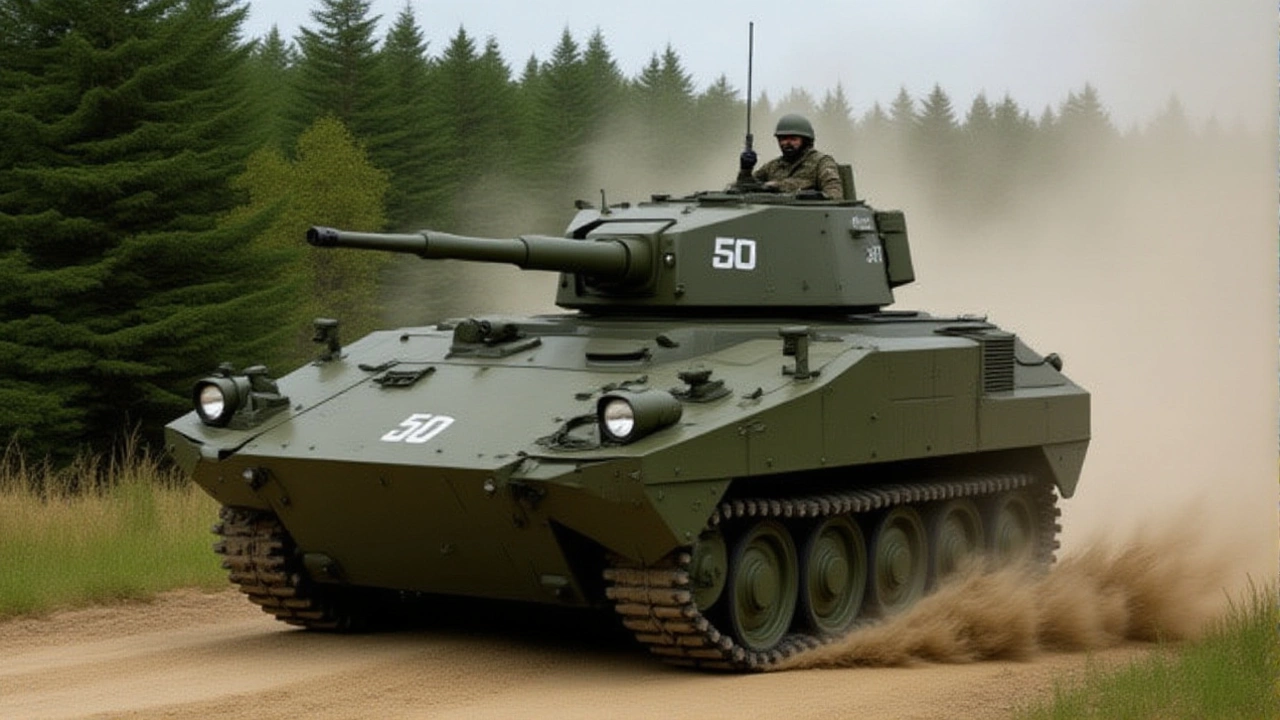
On November 25, 2025, the British Army abruptly grounded its entire Ajax armoured vehicle fleet — a £6 billion investment — after 31 soldiers from the Household Cavalry and Royal Lancers regiments were hospitalized with severe symptoms including nausea, ringing ears, and tingling limbs. The injuries occurred during the Iron Fist drillSalisbury Plain training exercise, a massive war game involving 60 Ajax vehicles across the 380-square-mile Salisbury Plain Training Area in Wiltshire. What started as a routine maneuver ended in chaos: soldiers emerged from the vehicles visibly shaken, some vomiting, others unable to walk without dizziness. The Army didn’t wait for reports — it halted all operations immediately.
What Went Wrong on Salisbury Plain?
The Ajax vehicles, each costing £10 million, were designed to be the backbone of Britain’s future Strike Brigades: fast, heavily armed, and digitally connected. But inside the cabin, the reality was far from futuristic. Soldiers reported the vibration levels felt like being inside a jackhammer. One medic at 1st Princess Mary’s Hospital on Aldershot Garrison described the injuries as "classic whole-body vibration syndrome" — the same condition seen in heavy machinery operators after years of exposure. The symptoms matched thresholds set by ISO 2631-1:1997, a global standard for occupational vibration safety. These weren’t minor discomforts — they were medically significant neurological responses.What made it worse? The vehicles became so unstable during high-speed runs that 60 of them had to be towed off the range by specialized transporters. No one could drive them back to Tidworth Camp. The Ministry of Defence confirmed the issue wasn’t isolated — it was systemic. Every variant — Ajax, Ares, Athena, Apollo, Argus, Atlas — was affected. The problem? Excessive low-frequency vibration transmitted through the chassis and suspension, amplified by the vehicle’s lightweight aluminum hull and untested digital control systems.
A Political Promise, a Military Disaster
Just three weeks before the crash, Luke Pollard, the Minister of State for the Armed Forces and MP for Plymouth Sutton and Devonport, stood beside an Ajax vehicle during a public demo on November 4, 2025, and declared it "safe and ready for frontline duty." His words were splashed across Defence Department press releases. Now, they’re a liability. The suspension order, issued by the Army Board, directly contradicts that assurance. It’s not just embarrassing — it’s dangerous. Soldiers were told these vehicles were battle-ready. Instead, they were exposed to levels of vibration that could cause permanent nerve damage.The timing couldn’t be worse. The British Army was counting on the Ajax fleet to modernize its Strike Brigades by 2026. The 20th Armoured Infantry Brigade Combat Team, based at Catterick Garrison, was scheduled to receive 150 of these vehicles. That timeline is now in shambles. And with the entire fleet of 589 vehicles grounded, the Army’s ability to respond to overseas contingencies — from Eastern Europe to the Middle East — is severely compromised.
The Manufacturer Under Fire
The General Dynamics UK facility in Merthyr Tydfil, Wales, is now the epicenter of a technical and financial crisis. The company, a subsidiary of the U.S.-based General Dynamics Corporation, signed a £5.5 billion contract in May 2014 to deliver the Ajax fleet. But this isn’t the first time it’s failed. Internal MoD reports from 2023 flagged "unacceptable vibration levels" — so much so that the vehicles were temporarily restricted to low-speed operations. Those restrictions were lifted after Pollard’s November 4 demonstration, suggesting political pressure overrode engineering caution.Now, under Clause 17.3 of the Strategic Partnering Agreement, Defence Equipment and Support — the MoD’s procurement arm headquartered in Abbey Wood, Bristol — must deliver a root-cause analysis by December 9, 2025. Failure to fix this could trigger liquidated damages worth hundreds of millions. And with the programme already delayed five years and over budget by 150%, General Dynamics UK faces its most serious crisis yet. Managing Director Chris Probert said his team is "mobilizing immediately," but soldiers aren’t buying empty promises. One veteran told The Telegraph: "We’ve been lied to before. This time, it nearly cost us our health."
Four Failures in a Decade
This is the fourth major failure of the Ajax programme since 2020. In 2020, noise levels caused hearing damage in over 50 soldiers. In 2022, brake systems failed during desert trials. In 2023, tracks came loose on rough terrain. Each time, fixes were promised. Each time, the vehicles returned to service too soon. The National Audit Office’s 2023/24 report called the programme "a textbook case of procurement mismanagement." And now, the same vehicles are again making soldiers sick.What’s chilling is how little changed. The vibration issue was known. The health thresholds were documented. The warnings were ignored. Major General Paul Tedman, the Army’s Director of Land Equipment, said: "The safety of our personnel is our absolute priority." But that’s a statement of the obvious — it’s not a plan. It’s a reaction. And in military procurement, reactions come too late.
What Happens Next?
By December 9, Defence Equipment and Support must present findings. Will they blame software? Suspension design? Material fatigue? Or will they admit the whole concept was flawed? Meanwhile, the injured soldiers — all from the Household Cavalry and Royal Lancers — are undergoing long-term neurological assessments. Some may never fully recover.The political fallout is inevitable. Parliament will demand answers. The National Audit Office will reopen its investigation. And the public? They’ll wonder why the Ministry of Defence keeps betting billions on broken hardware instead of proven systems. The Ajax was supposed to be Britain’s next-generation warrior. Instead, it’s become a symbol of hubris.
Frequently Asked Questions
How does this affect Britain’s military readiness?
The grounding of all 589 Ajax vehicles cripples the British Army’s Strike Brigade modernization plan. The 20th Armoured Infantry Brigade Combat Team at Catterick Garrison can’t begin training with its core vehicles until 2027 at the earliest. This delays deployment timelines for NATO commitments in Eastern Europe and undermines the Army’s ability to rapidly respond to crises. With no backup vehicles of equivalent capability, the Army is forced to rely on aging Warrior and Challenger systems — outdated platforms that lack the digital integration and speed the Ajax was meant to deliver.
What specific injuries did the soldiers suffer?
The 31 injured soldiers exhibited symptoms consistent with prolonged exposure to whole-body vibration exceeding ISO 2631-1:1997 safety limits: persistent tinnitus (ringing in the ears), numbness and tingling in hands and feet, nausea, vertigo, and in some cases, temporary loss of fine motor control. Medical evaluations at 1st Princess Mary’s Hospital confirmed nerve irritation and vestibular disruption. Long-term risks include chronic pain, hearing loss, and neurological impairment — conditions that may require lifelong medical care and compensation claims.
Why was the Ajax fleet cleared for use just weeks before the suspension?
Despite documented vibration issues in 2023, the Ministry of Defence lifted operational restrictions after a high-profile demonstration led by Defence Minister Luke Pollard on November 4, 2025. Internal engineering concerns were reportedly downplayed to meet political deadlines for public announcements. The Army’s own testing data had flagged risks, but procurement pressure to show progress on the £6 billion programme appears to have overridden safety protocols — a pattern seen in previous Ajax failures since 2020.
What financial consequences could General Dynamics UK face?
Under the £5.5 billion contract signed in 2014, General Dynamics UK is subject to liquidated damages for repeated failure to meet operational readiness standards. This latest failure triggers a financial clawback clause, potentially costing the company hundreds of millions. Additionally, the Ministry of Defence may demand full refunds for vehicles deemed unfit, and future defence contracts could be barred. With the programme already £1.8 billion over budget, this could push General Dynamics UK into a financial crisis, possibly forcing restructuring or even exit from the UK defence market.
Is there a backup plan for the British Army?
Currently, no. The Ajax was meant to replace aging Warrior and CV90 vehicles, and no alternative platform has been developed or procured. The Army is now forced to extend the life of 1980s-era hardware, which lacks modern targeting systems and digital networking. Some officials are quietly exploring options like the German Puma IFV or American Stryker, but procurement takes years. For now, the Strike Brigade concept is effectively on hold — a major strategic setback for Britain’s land warfare doctrine.
Could this lead to criminal charges?
While criminal charges are unlikely, the Ministry of Defence’s own internal reports from 2023 already flagged the vibration risks. If investigations prove that senior officials knowingly authorized operational use despite documented dangers, it could trigger a public inquiry and possible charges under the Health and Safety at Work Act. Soldiers’ families may also pursue civil litigation. The precedent is set: in 2018, the UK government paid £12 million in compensation after similar vibration injuries were found in Royal Navy ships — and this case is far worse.